

Melbourne Genealogist
From Little Things
Big Things Grow
Unearth the seeds of your family tree and discover your ancestral story.


Where did my family come from?
What was Grandma doing during the war?
Is that story about great Aunt Ethel really true?
If you’ve ever asked yourself questions like these and are unsure how to answer them, Little Things Genealogy can help.
With over 40 years of family history research experience and formal qualifications as a professional genealogist and family historian, I love nothing more than helping people uncover their family histories and mysteries.
At Little Things Genealogy, I bring together compassionate storytelling and evidence-based research to help you understand your family’s past and build a family tree you can trust.
Based in Australia and working with clients around the world, I specialise in family history research, family tree building, solving genealogical brick walls, and revealing the stories hidden in historical records.
Welcome to my website!


About Me
I started researching my family history after my Nanna showed me her grandparent’s marriage certificate. That was over 40 years ago, and I have been researching ever since. Along the way I’ve undertaken a number of genealogy courses and gained formal qualifications in family history, and love helping others uncover their family histories and mysteries
How I Can Help
Every family history research project is unique. You may be looking for a family tree chart or deeper research into your ancestors and their lives. Or perhaps you have a brick wall you are trying to break down. Whatever it is you are curious about, here are some of the ways I can help

Story Archive
Over the years I have discovered many a fascinating ancestor and solved quite a few family mysteries. You can read about some of my genealogical adventures in my Story Archive, where I share how historical records and research can come together to uncover family stories.

Testimonials
Latest From The Blog

Geneaology FAQs
-
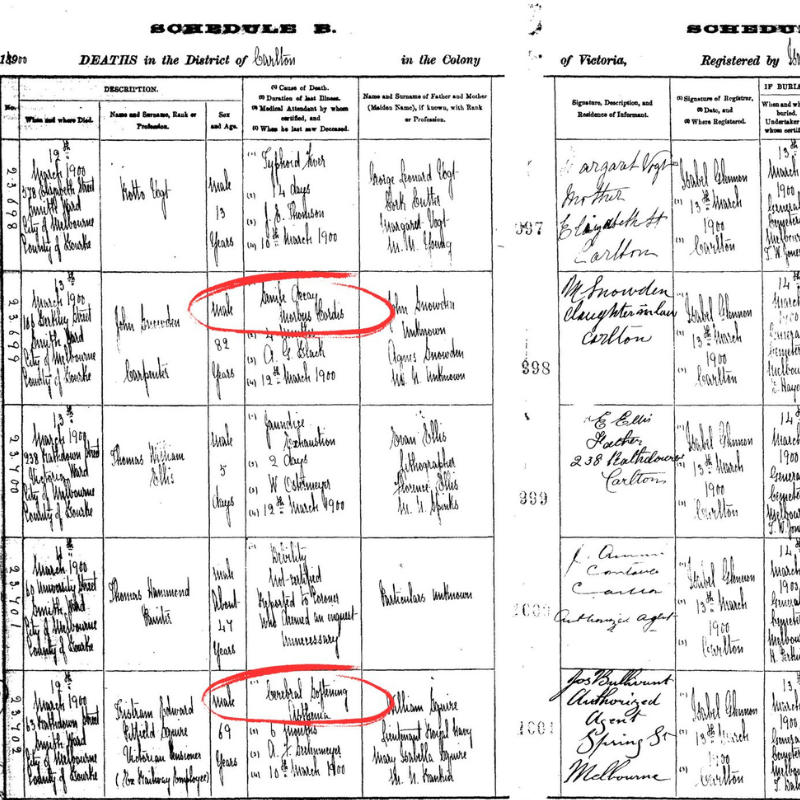
A genealogist researches family history by tracing people, relationships, and events through historical records, archives, and—where appropriate—DNA evidence. Genealogy research may include identifying and verifying family connections, locating records across different countries and time periods, and interpreting what those records actually mean.
Beyond gathering names and dates, a genealogist helps make sense of the information—placing individuals within their social, cultural, and historical context so that a family tree becomes a coherent, accurate, and evidence-based story.
-
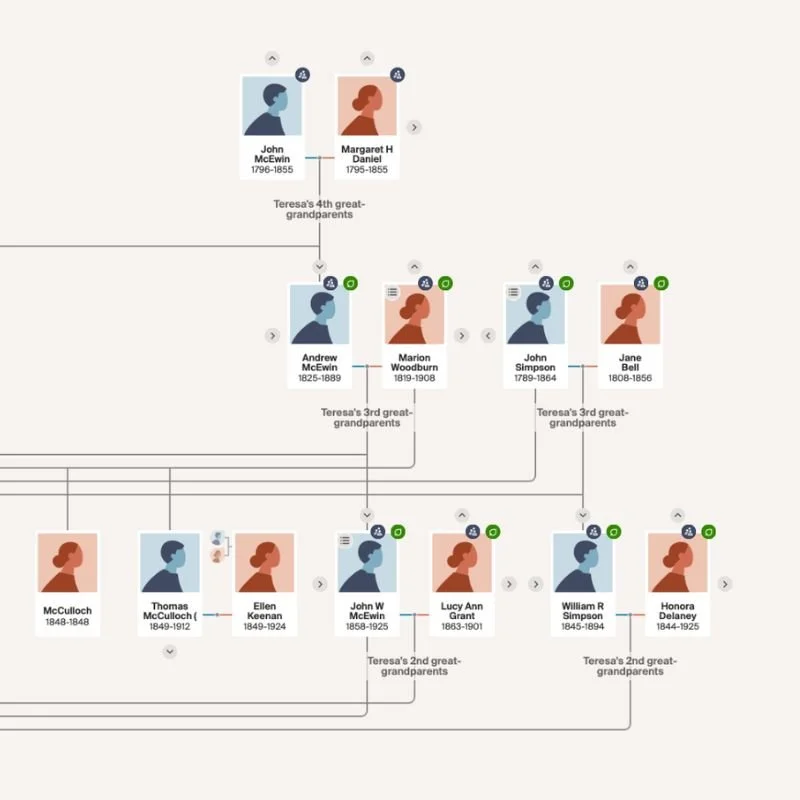
A genealogist can help you build a family tree from the beginning, extend an existing tree, or focus on a specific question or individual. This might involve tracing earlier generations, identifying unknown ancestors, or clarifying how different branches connect.
Just as importantly, a genealogist ensures that each step is supported by reliable evidence, so that your family tree is not only larger, but more accurate and meaningful. -
Many people begin their family history research themselves, often using online platforms. Over time, they may reach a point where records become harder to find, information becomes unclear, or different sources appear to conflict.
A professional genealogist brings experience in navigating complex records, interpreting incomplete information, and working across multiple sources. This can save time, avoid costly mistakes, and provide confidence that your family history is grounded in evidence rather than assumption. -
Online platforms such as Ancestry provide access to large collections of historical records and online family trees, which can be a valuable starting point for family history research. However, these platforms do not verify the accuracy of the information they contain.
A professional genealogist goes beyond what is readily available online—searching specialised archives, interpreting original documents, and assessing the reliability of each source. They also critically evaluate online family trees, which may contain errors or unproven connections, and ensure that any conclusions about your family history are supported by evidence.
There are many ways to explore a family history — and what you hope to know, understand or create can shape the research from the very beginning.